
Nyheder
Unified CTMS: Restoring Yard Visibility and Eliminating Data Silos
How CTMS Unifies Gate, Stack, and Billing Data for Full Yard Control
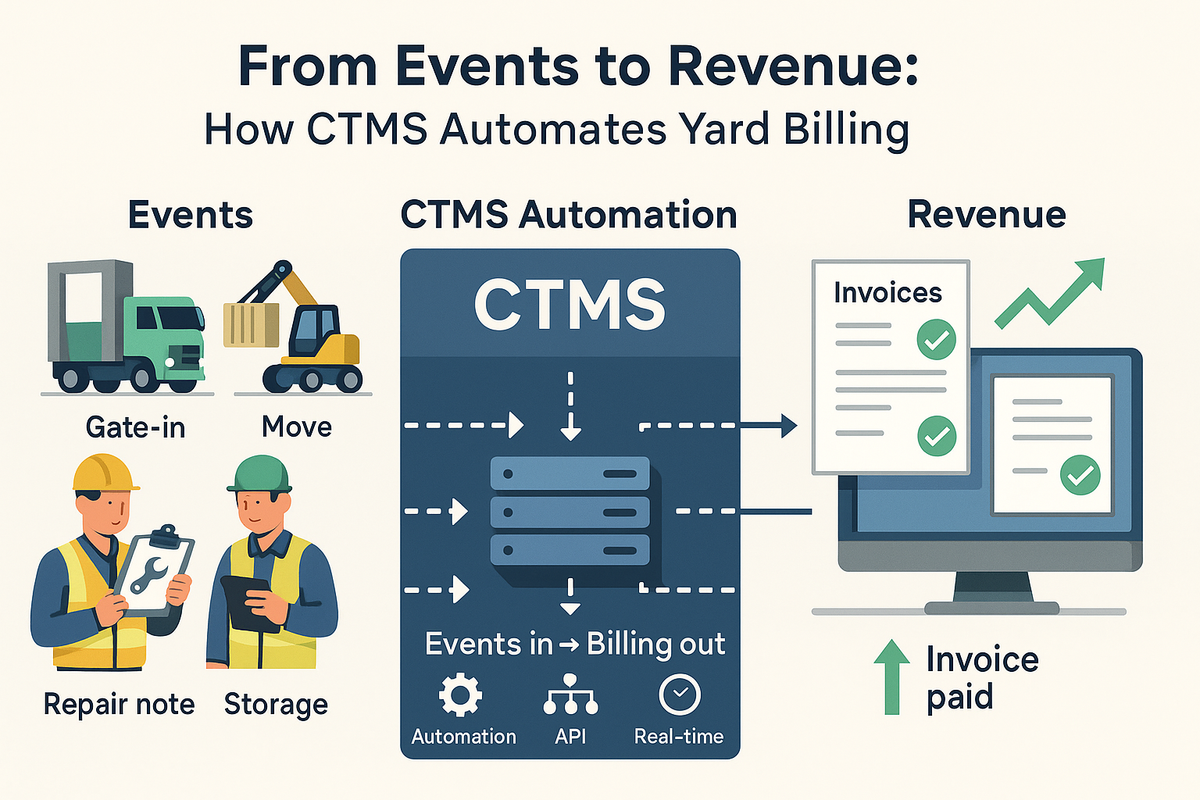
Yard visibility breaks down when gates, stacks, repairs, and billing live in separate systems. Data gets re‑typed, events go missing, and teams argue over “which record is right.” A unified CTMS pulls gate events, repair logs, storage times, and container tracking into one interface, restoring a single version of truth and a seamless flow from operations to finance.
The Risk of Fragmented Yard Systems
- Lost visibility: a container appears “billed” but is still on the ground.
- Manual reconciliation: spreadsheets to match gate moves with stack positions and invoices.
- Revenue leakage: missed dwell/reefer/repair charges due to disconnected data.
- Delayed action: alerts live in one system while work orders live in another.
The outcome is predictable: misplacement risk rises, cash collection slows, and customers lose trust in status updates.
Unified CTMS as a Single Source of Truth
A modern CTMS consolidates gate, stack, repair, reefer, and storage data on one screen. Real‑time alerts flag density thresholds, overdue dwell, and exception moves before they turn into costs. Operators see the same live picture as finance, so every service is captured and every charge maps to an auditable event.
- Live container inventory with gate‑in/out history and stack location.
- Rule‑based alerts for misplacement, congestion, and SLA violations.
- Consistent data model feeding both operations and billing.
Mobile Scanning and Staff Tracking
Handheld apps reduce “fat‑finger” errors and cut guesswork. Operators scan containers at the moment of action, confirm slots, attach photos, and close tasks in seconds. Staff activity is traceable, which simplifies shift handovers and post‑incident reviews.
- Barcode/OCR scanning for containers, chassis, seals.
- On‑device checklists for gate, damage, and reefer rounds.
- Time‑stamped actions tied to user IDs for accountability.
Cloud Audit Logs and Role-Based Access
Every change leaves a trail. Cloud‑based audit logs record who did what and when, across gate edits, rate applications, and equipment moves. Configurable user roles keep sensitive financial and operational data restricted to the right people, protecting integrity without slowing down work.
Dashboards, Exports, and API Connectivity
Unified dashboards surface KPIs by block, carrier, and service type. One‑click exports feed back‑office reports, while APIs connect CTMS to accounting and carrier systems for automated hand‑offs. Explore a CTMS container terminal management system built for unified yard visibility.
- Revenue and dwell analytics per container, service, and timeframe.
- API/EDI endpoints to sync moves, invoices, and status messages.
- Scheduled dashboard exports for finance and operations.
Real-World Benefits
- Fewer misplacements: one system of record reduces search time and re‑handles.
- Lower revenue leakage: event‑based charges capture dwell, repair, and reefer usage automatically.
- Faster decisions: real‑time alerts and unified context cut radio chatter and callbacks.
- Smoother audits: exportable logs resolve disputes with timestamps and evidence.
“Since consolidating gate, yard, and billing into a single CTMS, we stopped reconciling three versions of the truth. Alerts and charges line up with the moves on the ground.”
Conclusion
When gate, stack, and billing run in silos, visibility fades and money slips through the cracks. A unified CTMS restores control: one timeline of events, one data model, and one operational narrative from arrival to invoice. That’s how depots move from firefighting to proactive yard management.
Sources